If you own a property with a big garden, a yard or a side plot you hardly use, that space could be paying you every month. Put a small home or a dome on it, let it to a tenant or to holiday guests, and land you already own starts to earn.
It is one of the simplest ways to raise your income without buying another property. With a rental agent or a holiday-let manager running it, most months there is very little left for you to do. Here is what it costs, what it can realistically bring in and what to check before you order.
Why a backyard rental can make sense
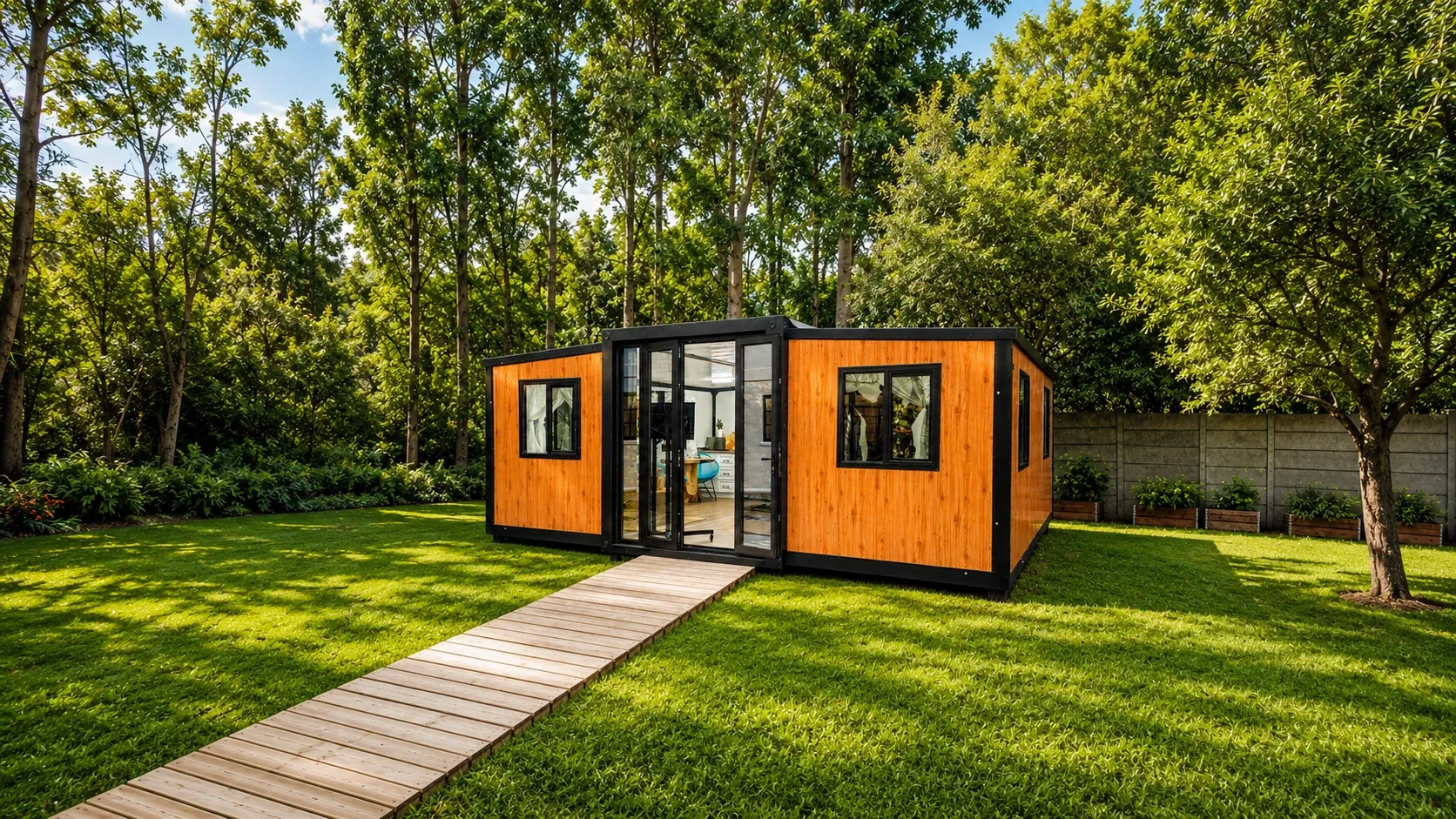
With most rental investments, the land is a big part of the price. In your own garden you have already paid for it, so the main cost is the unit itself. You are also not building for months: a 20 ft expandable home arrives folded on a truck and is set up in about a day, and a fully completed dome suite takes about one to two weeks.
Rents have been rising too. The PayProp Rental Index puts the average South African rent at R9,715 a month in the second quarter of 2026, and the Western Cape average at R12,561, up 9.7% in a year. Those averages cover homes of every size, so treat them as the market backdrop and not as the rent for a small unit.
Two ways to earn from the same space
20 ft home: a monthly tenant
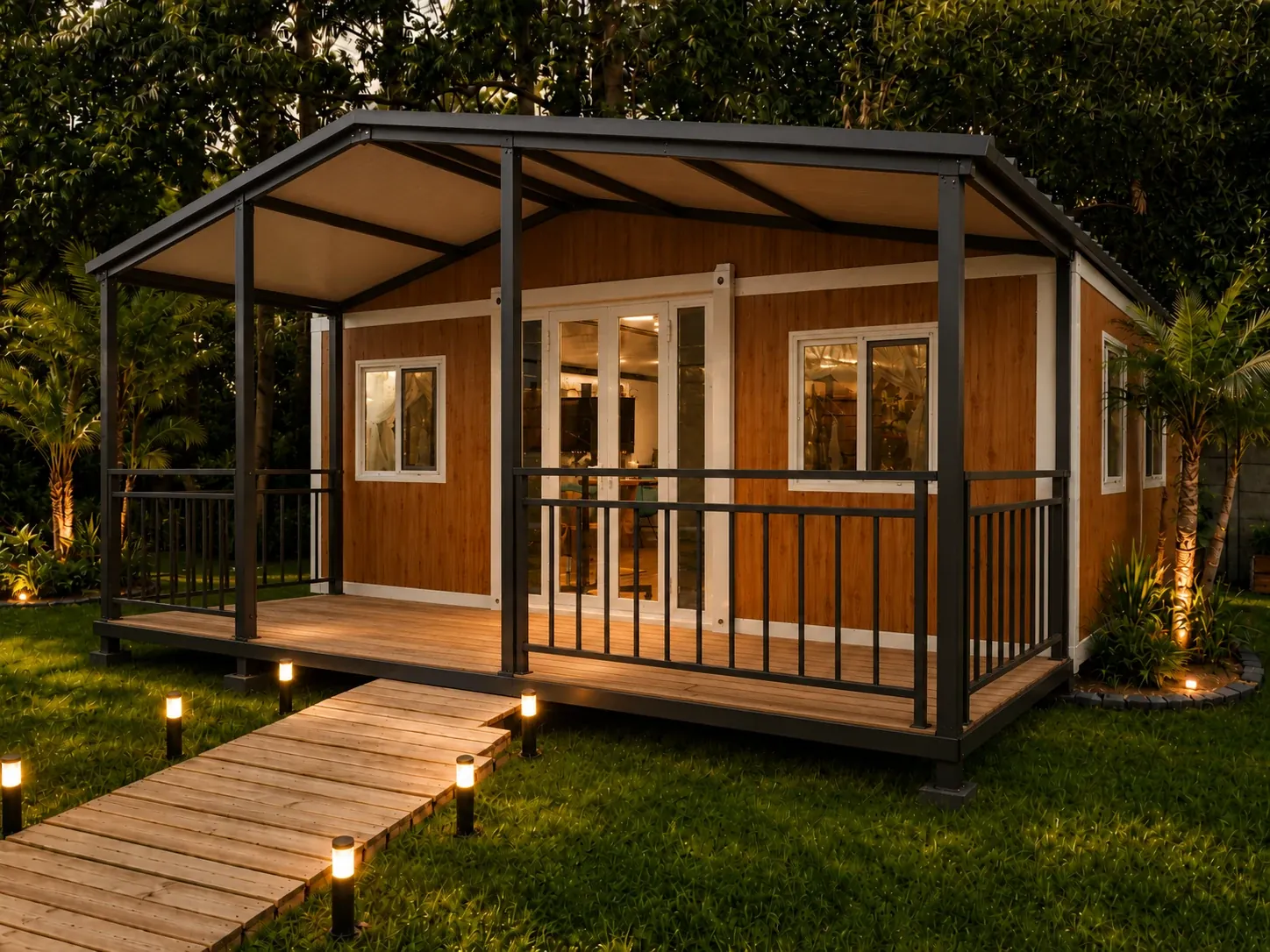
Two bedrooms, a bathroom, a kitchen and a living area, 6.3 × 5.9 m once unfolded. From R380,000 unfurnished. Best for steady monthly rent and the least work.
6 m dome: holiday guests
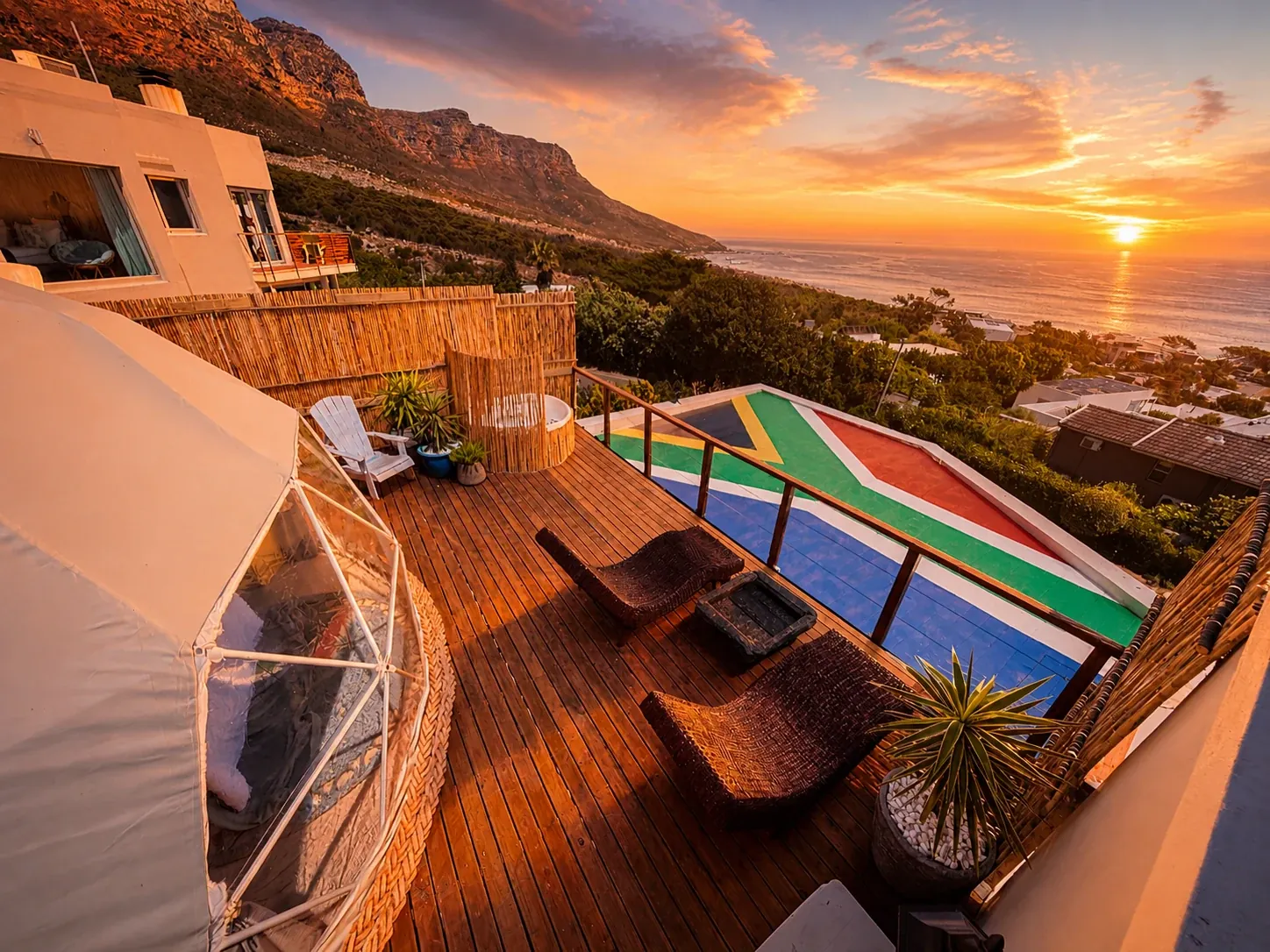
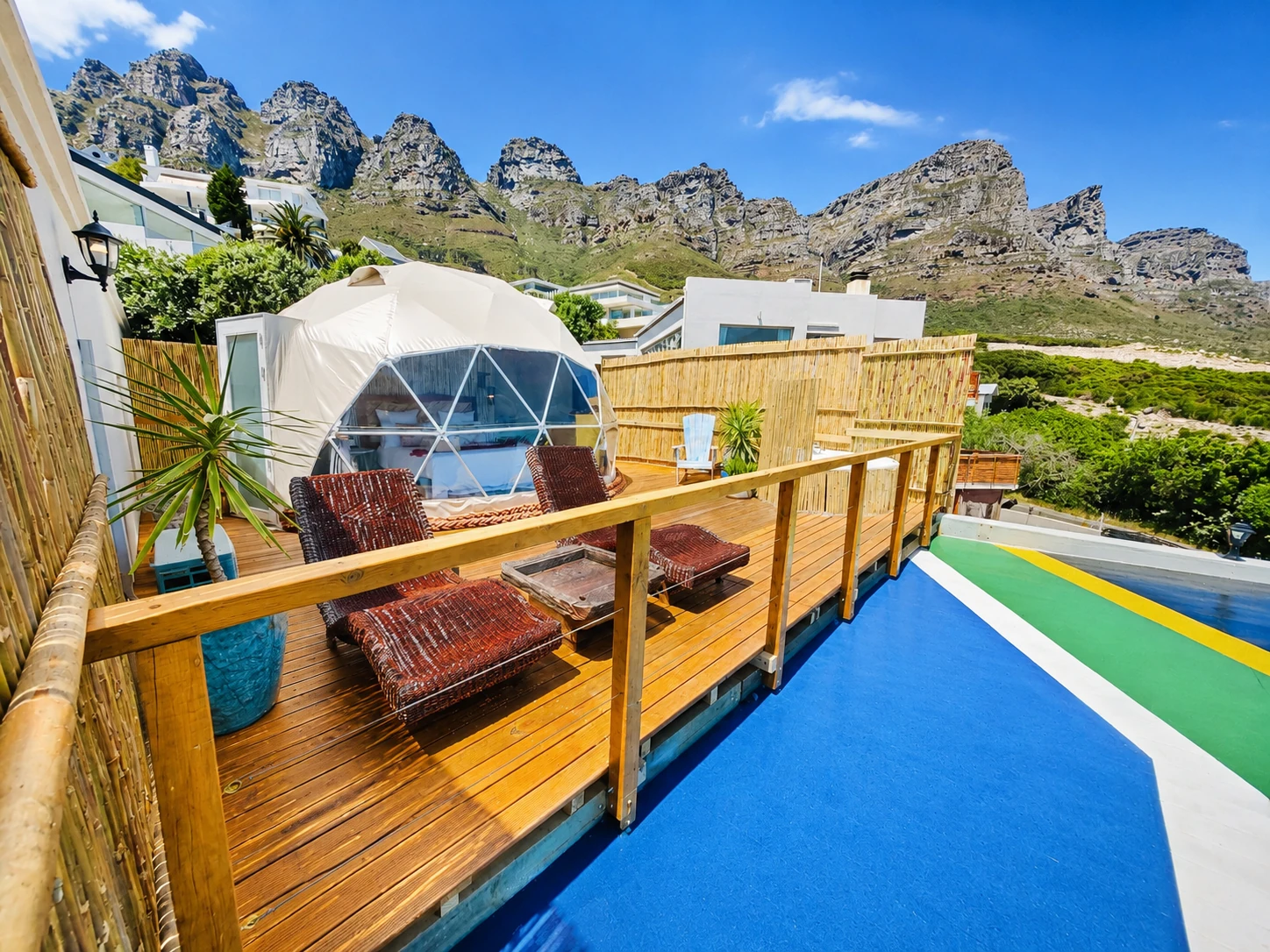
A completed suite with a raised deck, a tiled bathroom and services, from R350,000. It sleeps two, and the loft version sleeps up to four. Best for short stays, where guests pay by the night.
Transport is quoted for your location, and so are installation and site preparation for the 20 ft home. See the full details on the 20 ft home and glamping dome pages.
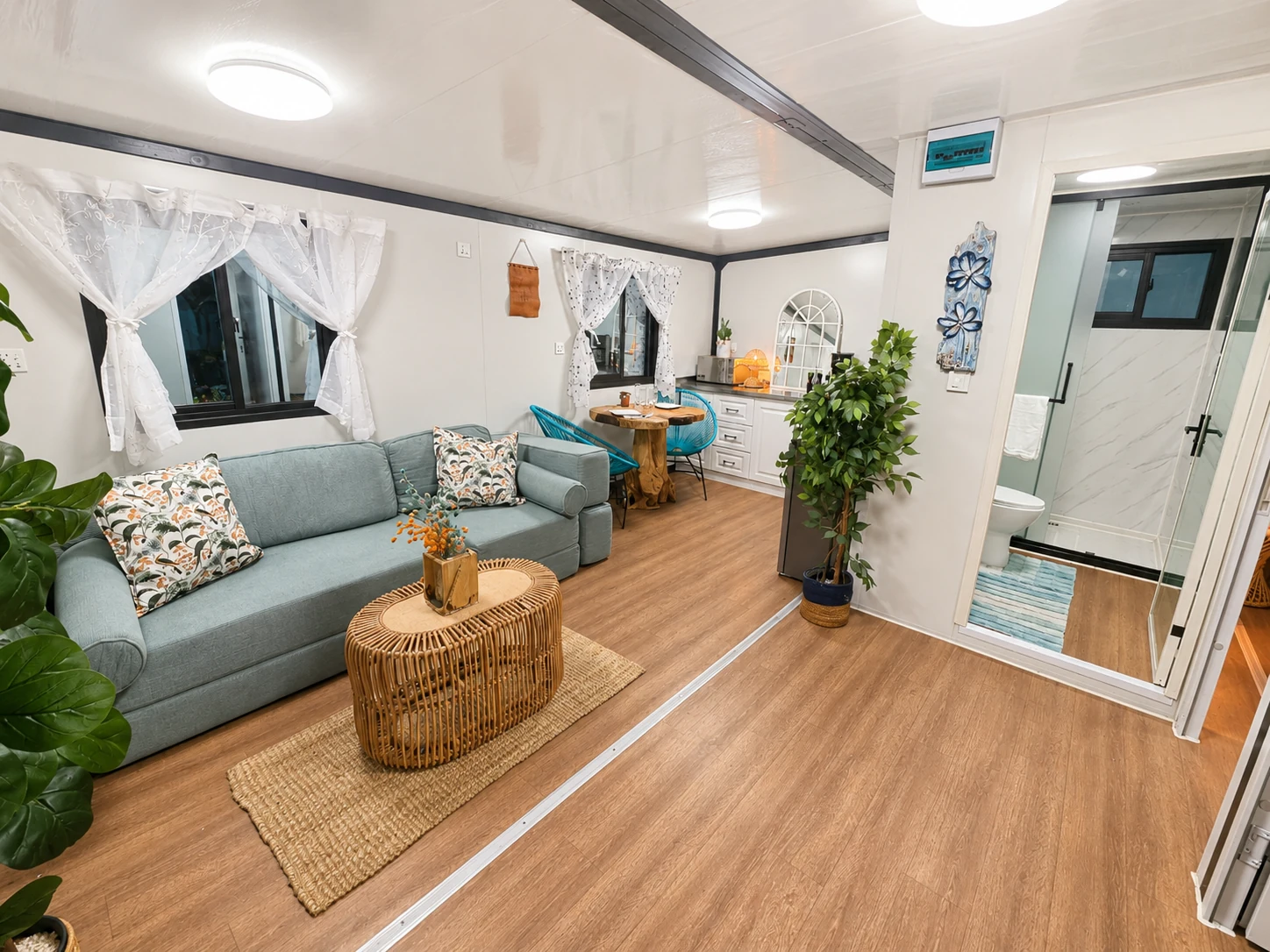
What a 20 ft home can earn from a long-term tenant
Your area decides the rent more than anything else. As a reference, on 2 November 2026 a one-bedroom garden cottage in Pinelands was advertised at R8,000 a month, and a furnished one-bedroom cottage in Table View at R10,500. Smaller towns will be lower. Ask a local rental agent what a small two-bedroom unit lets for in your area.
The table assumes an all-in budget of about R450,000: the home, transport, installation, a level base, hot water and connections. Your quotation will confirm the real figure for your site.
| Monthly rent | Rent per year | Left after costs, before tax | Time to earn back R450,000 |
|---|---|---|---|
| R6,000 | R72,000 | R57,600 | 7.8 years |
| R8,000 | R96,000 | R76,800 | 5.9 years |
| R10,000 | R120,000 | R96,000 | 4.7 years |
| R12,000 | R144,000 | R115,200 | 3.9 years |
An illustration, not a forecast or a promise. Costs here are 20% of the rent: 10% for a managing agent (the average monthly commission reported by PayProp) and 10% as an allowance for repairs, insurance and empty weeks. The figures leave out income tax, the agent’s upfront fee, any bond interest and any rise in municipal charges.
Once it has earned back its cost, the home keeps earning, and it remains something you own. It can also move: it folds back up, goes onto a truck and can be set up again at another site.
What a dome can earn from holiday guests
A dome is made for short stays, not for a permanent tenant. Published rates for dome stays in the Western and Eastern Cape ran from about R1,950 to R3,000 a night for two in late October 2026, but those are destination stays with big views. A dome in a suburban garden will usually sell for less, so this table uses R1,500 and R2,000 a night.
For a sense of the wider market, AirROI’s data for Cape Town shows about 42% occupancy across Airbnb listings for April 2025 to March 2026, and a median rate of about US$107 a night, or roughly R1,800.
| Nights booked a year | Occupancy | At R1,500 a night | At R2,000 a night |
|---|---|---|---|
| 90 | About 25% | R135,000 about R67,500 after costs | R180,000 about R90,000 after costs |
| 120 | About 33% | R180,000 about R90,000 after costs | R240,000 about R120,000 after costs |
| 150 | About 41% | R225,000 about R112,500 after costs | R300,000 about R150,000 after costs |
An illustration, not a forecast or a promise. Costs are taken at 50% of income: cleaning, linen, electricity, booking-platform commission and a manager. One 2026 analysis puts operating costs in Cape Town at 45–65% of income, so yours may be higher. Figures are before income tax.
Budget about R420,000 for a completed suite with transport and furniture. At 120 nights and R1,500 a night, that comes back in a little under five years before tax. A holiday let can bring in more than a tenant, but income moves with the season, and the cover and deck need looking after. If you want the quieter option, choose the long-term tenant.
How hands-off can it really be?
No rental runs itself completely. Someone has to find the tenant, collect the rent and deal with a leaking tap. The good news is that the someone does not have to be you.
| How you run it | Who does what | What it costs |
|---|---|---|
| Long-term tenant, with a managing agent | The agent vets the tenant, collects the rent, inspects and arranges repairs. You approve bigger repairs, read the monthly statement and declare the income. | On average 10% of the rent, plus an upfront fee of about 7.3% of a year’s rent |
| Holiday let, with a full-service manager | The manager handles pricing, listings, guests, cleaning, linen and maintenance. You read the report, block any dates you want and declare the income. | About 20–30% of booking income in Cape Town |
| You run it yourself | You do everything, from adverts and guests to repairs. | No management fee, but your time |
A few choices at the start keep things easy later: give the unit its own entrance and path, install separate meters so the occupant pays for their own electricity and water, and use a proper written lease.
What to check before you order
Zoning and title deed
In Cape Town, Residential Zoning 1 properties have an additional use right to a second dwelling, and in some cases a third, unless a title-deed condition blocks it. George says second dwellings of up to 175 m² need no extra land-use approval. Other municipalities set their own rules.
Building plans
Every municipality has its own rules. Because the home is a container-type structure with no conventional foundation, the plans are simpler to draw up and get approved than for a conventional build. Larger non-urban plots are usually simplest; urban stands have more points to check. We supply the home’s plans and technical information, and you add your own documents, such as proof of ownership and zoning.
Temporary or permanent approval
The home can be submitted as a temporary structure. Ask your municipality how long that approval runs, because a rental you plan to keep for years needs approval that lasts as long.
Estate and body-corporate rules
An estate, homeowners’ association or body corporate can restrict or ban short-term letting even where the zoning allows it. Read the rules first.
Short-term letting in Cape Town
The City’s commercial rates test looks at whether more than 50% of a property’s bedroom-nights are available for short-term letting over 365 days, and reclassification starts on 1 July 2027. The City says it does not apply to long-term rentals or to part-time letting of some of your residence.
Tax
SARS taxes rent from a garden flat as income. Rates, bond interest, agent fees, insurance and repairs can be claimed for the let portion, but the cost of the home itself is capital and not deductible. Rental profit can also make you a provisional taxpayer. Ask your tax practitioner.
Insurance
Tell your insurer about the unit and how you will let it. Check that holiday guests are specifically covered if you plan short stays.
Municipal charges
A second dwelling can raise your property’s valuation and service charges. Ask your municipality, and include the extra cost in your sums.
What your garden needs
- Space for the footprint: about 6.3 × 5.9 m for the 20 ft home, plus room to unfold it and walk around it
- A level base: no concrete foundation is needed for the home, only level supports such as a slab, pillars, stilts or bricks. A dome stands on a raised wooden deck
- Truck access: the 20 ft home arrives on a truck with a crane, which has to get close to the spot
- Services close by: the closer your electricity, water and sewage points, the simpler and cheaper the connection
There is more on site preparation and brick-build costs in our granny flat guide.
From empty garden to first rent
- Measure the space and check that a truck can reach it.
- Check the rules: zoning, title deed, estate rules and what your municipality needs.
- Do your own sums. Ask a local agent what the unit would let for, and use their number in the tables above.
- Get a quotation. Send us your town and how you plan to use the unit.
- Prepare the site, submit your plans and take delivery.
- Hand it over to an agent or a holiday-let manager, or run it yourself.
SEE BOTH IN PERSON
Walk through a 20 ft home and a 6 m dome in Hout Bay.
Viewings are by appointment at 217 Hout Bay Main Road. Or send us your town and we will quote delivery and installation for your site.